
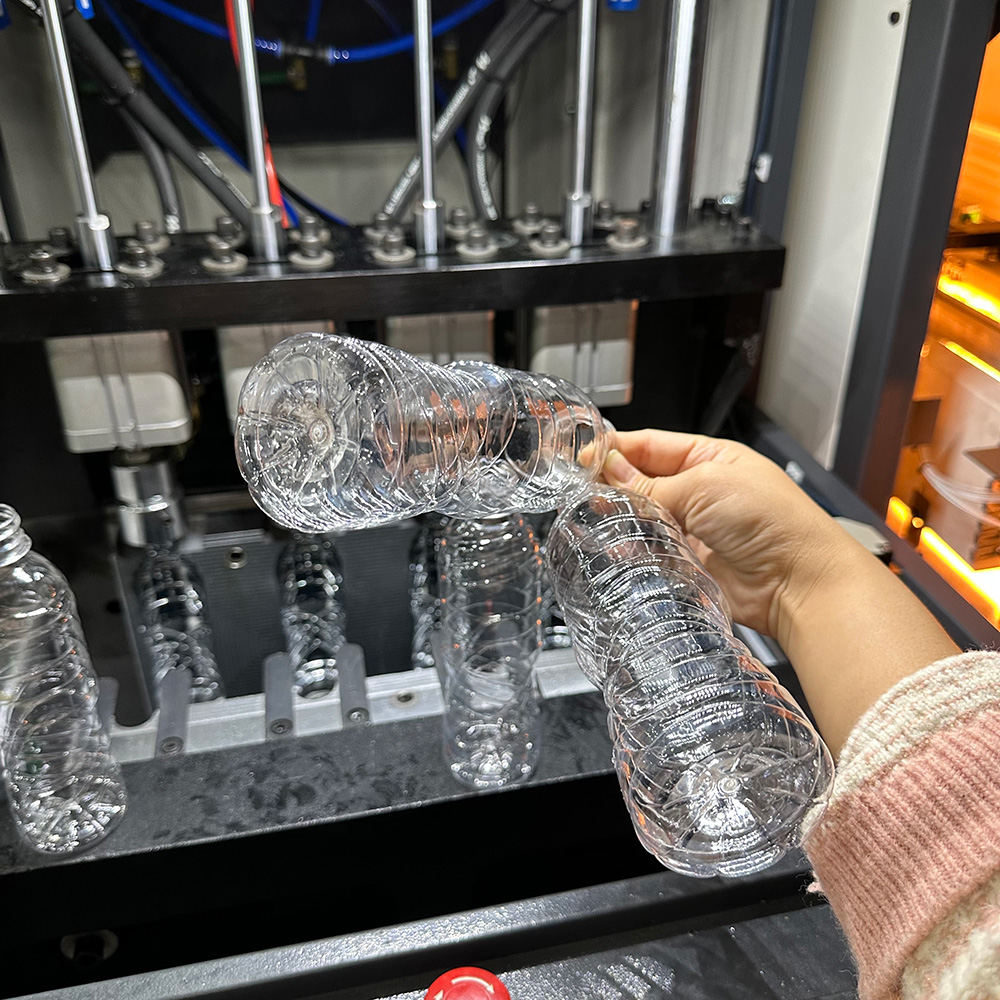
In high-speed 2-stage stretch blow molding (SBM) of PET containers, achieving optimal material distribution and consistent wall thickness across all cavities is crucial for container top-load strength, drop resistance, and lightweighting goals. While preform temperature profiling sets the thermal baseline, the precise pneumatic timing of the pre-blow sequence, stretch rod mechanical movement, and high-pressure blowing transition directly determines axial and radial material expansion.
As a leading Chinese engineering enterprise specializing in precision PET preform molds and high-performance blow molding machine molds, Yushun Machine delivers a deep technical investigation into pre-blow pressure kinetics and valve switching dynamics. Understanding these fluid dynamic relationships enables packaging engineers to eliminate wall thinning, off-center bases, and structural stress failures.
1. The Mechanics of Stretch Blow Molding Sequence Calibration
The stretch blow molding process relies on a tightly synchronized sequence involving mechanical elongation and two distinct pneumatic pressure phases:
- Mechanical Stretching Phase: A driven stretch rod descends into the heated preform, guiding axial extension toward the base insert of the blow cavity at speeds between 1.2 m/s and 2.2 m/s.
- Pre-Blow Phase (P1): Low-pressure compressed air (typically 6 bar to 15 bar) is introduced into the preform interior before or immediately as the stretch rod touches the preform base. P1 expands the preform radially, preventing the stretching rod from contacting the cold inner wall while establishing uniform initial strain hardening.
- High-Pressure Blowing Phase (P2): Once the preform reaches near-full axial extension, high-pressure air (30 bar to 40 bar) is triggered. P2 forces the expanding polymer bubble against the chilled CNC-machined cavity walls of bottle blowing machine molds, locking in optical clarity, detail definition, and final structural crystallization.
2. Pneumatic Timing Anomalies and Wall Thickness Defect Root Causes
Improper synchronization between the stretch rod position, P1 pressure onset, and P2 transition creates predictable wall thickness defects across container profiles:
Fluid Dynamics Principle: Premature P2 high-pressure initiation pins the expanding PET preform prematurely against upper cavity walls, depriving the bottle base of resin and causing severe base roll-outs or bottom puncture failures during hot-filling or carbonation.
A. Premature Pre-Blow Initiation (P1 Too Early)
If pre-blow air initiates before the stretch rod has sufficiently engaged the preform tip, expanding PET contacts upper cavity walls prematurely. Heat transfers instantly into the cold mold metal, causing the polymer to freeze in upper sections while leaving the base excessively stretched and thin.
B. Delayed Pre-Blow Initiation (P1 Too Late)
When pre-blow initiation is delayed, the mechanical stretch rod drags unpressurized preform material down to the bottom mold base. This pulls excess polymer down into the feet or base area, leaving thin, weak shoulder and sidewall regions that buckle under vertical stacking loads.
C. Insufficient P1 Pressure Differential
Inadequate P1 pressure fails to overcome local polymer melt resistance, resulting in asymmetric preform inflation. This causes circumferential wall thickness eccentricity and off-center base gate alignment.
3. Tooling Engineering Synergy: The Yushun Machine Advantage
Precision pneumatic timing yields optimal results only when supported by highly stable mechanical mold tooling. Thermal fluctuations, erratic exhaust venting, or cavity misalignment in sub-standard molds ruin precise valve timing settings.
Yushun Machine manufactures specialized PET blowing molds and blow molding machine molds designed to optimize pneumatic fluid dynamics:
- Micro-Vented Parting Lines: Precision CNC-milled exhaust channels allow rapid air evacuation between the expanding preform and cavity wall during P2 high-pressure expansion, preventing localized air pockets and surface hazing.
- Conformal Base Cooling Circuits: Independent 3D water cooling channels integrated into base inserts accelerate heat transfer from heavy base sections, securing rigid petaloid formations and eliminating post-mold distortion.
- Quad-Stage Lock Mechanical Precision: High-tensile mold structures with quad-stage multi-taper alignment prevent parting line micro-flexing under 40 bar blowing pressure, ensuring sub-micron wall thickness repeatability.
Pneumatic Timing Parameter Matrix & Defect Analysis
The matrix below outlines parameter adjustments and their direct structural impact on blown PET containers:
| Timing Condition | Structural Material Impact | Observed Bottle Defect | Engineering Correction |
|---|---|---|---|
| P1 Triggered Too Early | Excess material frozen in shoulder region | Thick shoulder, paper-thin base (Base Roll-out) | Delay P1 start relative to stretch rod position |
| P1 Triggered Too Late | Excess material dragged to bottle base | Thin shoulders, heavy base, low top-load | Advance P1 start signal timing |
| P1 Pressure Too Low (< 6 bar) | Incomplete radial expansion before P2 | Sidewall thickness eccentricity and haze | Increase P1 regulator pressure setting |
| P2 Triggered Too Early | Polymer bubble freezes before stretching completes | Off-center gate, base punctures under load | Delay P2 switch point until preform reaches base |
Yushun Machine: Specialized Blow Molding Tooling Experts
Achieving optimal bottle wall thickness and maximizing lightweighting efficiency requires integrating pneumatic timing precision with world-class mold engineering. Inconsistent mold cooling, poor air venting, or low-precision mold machining will corrupt even the most refined machine recipe settings.
Yushun Machine delivers turnkey packaging solutions from China, specializing in custom PET preform molds, PET blowing molds, and bottle blowing machine molds. Constructed from premium aluminum alloys and vacuum-quenched stainless steel with conformal cooling technology, Yushun Machine equips global packaging producers with the tooling stability needed to achieve zero-defect manufacturing and high OEE.
Optimize your packaging line's material distribution and elevate blowing efficiency. Contact Yushun Machine today for specialized technical audits and custom mold proposals.